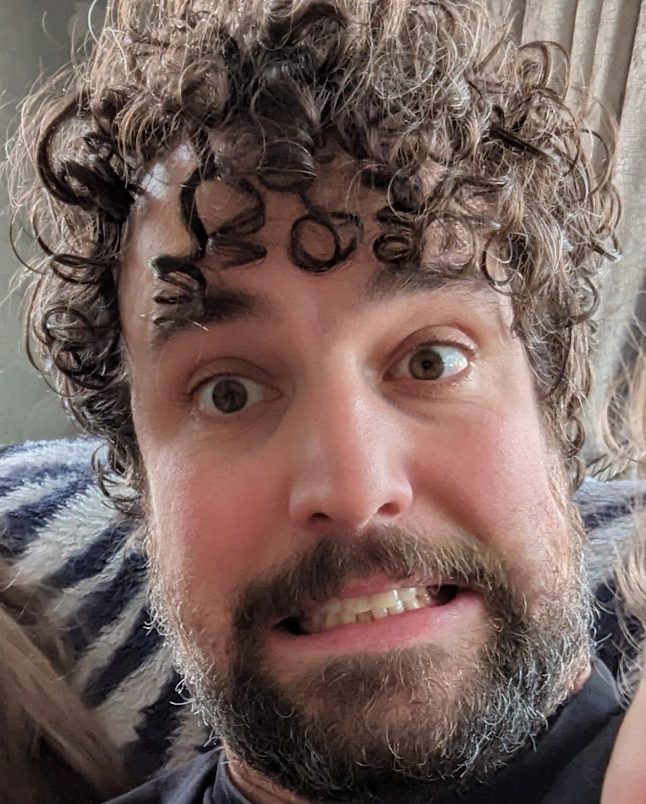
Fatherhood suits me, it seems. I have spent the month changing nappies, cleaning clothes, working through chores around the house, and a hell of a lot of not sleeping. Still, I am happy. This little girl is strangely perfect. She looks up at me with these thoughtless yet intense stares, and I can’t help but stare right back. I find myself guessing at who she will turn into when she grows up. Will she kick about in dirty cons and piercings I disapprove of? Will she covet books and stories? Will she write? Who knows.
I’ve been thinking a lot on how I’d like to raise her, and what lessons or values I’d like to impart on her. The more I think about it though, the more I realise that I don’t have too much choice in the matter. Life isn’t like the movies. There won’t be a time in Lily’s future where she’s in some moral quandary, some crucial decision, only to flashback to me doing the dishes or sitting in the garden, espousing some metaphor or lesson. It doesn’t work like that. Who she is will be reinforced over and over again by the decisions that I and others around her make – by our actions. I think that’s important to keep in mind.
As such, I’ve been learning a number of lessons myself thanks, again, to my old pal Vonnegut. After a good few chapters I eventually gave up on Memento Mori (it just didn’t grab me) and moved onto Mother Night (which grabbed me a whole lot). As always, when reading Vonnegut, I never really appreciate how much thought he puts into every sentence until I’ve finished reading them all. Every word seems to naturally flow from the one before. The story seems to form itself, ridiculous as it may be, because that’s just how the story is. I can’t imagine anything other than the story existing as it, not being written or thought up, but just existing.
But enough of that.

There’s a scene in Mother Night where the main character, a former Nazi propagandist, yells a lesson down to an American veteran who he just beat up. I don’t have the actual quote to hand, but he yells something along the lines of; if you want to battle against a man of pure evil, then you deserve to be beaten, because if you honestly believe that someone can be pure and utter evil then you’re as dumb as a sack of rocks. Not a direct quote, but I think I got the jist.
First of all, this reminds me of a habit that Vonnegut has, where at some point in his stories – usually veering towards the end – he has a character stand up and tell the reader what the point of the story is, what the moral is that needs to be learned. Strangely enough, this never feels forced. It never feels as though the author is frustrated with himself and wants to give a speech that’s a little too on the nose for comfort. For Vonnegut, it feels as though the entire book was the framework for this single outburst of brutal honesty.
Secondly, it made me think of how I’ve been treating certain influences in my life, and the… I want to say the word hypocrisy, but not as harsh as that. I’ve always espoused Salinger’s work as a great inspiration to me, all whilst knowing of his strange treatment of women. Vonnegut himself seems to play heavily on the gross caricature of black americans in a way that makes me think he is not being ironic. I still read them though.
Last year I got tickets to see Brand New when they were playing a gig in Glasgow. I was extremely excited for this gig. When I was sixteen, my very first paycheck from my very first job was spent on Deja Entendu from a defunct record store. If that cd was a tape I would’ve worn it out with how many times I listened to it. My young mind dissected every song for every meaning (and every one of them related to me and my girlfriend, for some reason). I got every album since, loving it all, listening to the music mature as I matured alongside it. One of my greatest musical regrets will probably be not seeing them support Modest Mouse, and then not seeing them at all. And then they released their newest album, which I preordered a copy of, and announced a tour, which was likely to be their last. I stood outside the ticket office at 8am, two hours before they opened, waiting to get tickets. I was 28 years old at the time, but felt sixteen again.
And then the allegations came out. A week before the gig, their final show on the tour, Jesse Lacey, front man of the band, was accused of sexually exploiting an underage girl a number of years ago. She told a story of manipulation and exploitation. An older man charmed his way into a compromising relationship with a younger girl. A tale as old as time, a song as old as rhyme.
My friends and I spent the next few days debating with ourselves whether it was worth still going to the gig. I had a pit in my gut about the whole thing that Anna had to talk me through – go and fulfil a long lasting wish, or not go and condemn his actions? – and mercifully the gig was cancelled before any decision had to be made. The next few days were filled with discussions that many fans had – and a good friend even related her opinion, having being once an impressionable young girl herself. Still, it didn’t matter. That lump in my gut didn’t go away. When I went back to listen to their album again, one that had been on constant repeat the week before, the pit just seemed to deepen. So I stopped listening to their music and that was that.
I felt just in my actions. Righteous.
And so Mother Night’s pronounced message hit me hard. This all-american hero was smote down unceremoniously because he felt he had the gall and righteousness to tackle what he considered to be a great evil, to come at it for no other reason than what he perceived, without taking into account the nuances of human nature or his own flaws. And how, at the end of it, the hero was a pathetic shell, halfheartedly retreating.
I don’t buy Nescafe coffee. I go out of my way not to buy it, even going for more expensive brands, because I don’t want to support their practices on baby formula in developing countries. But man, do I love those KitKat Chunky’s. I refuse to look into what Jim Carrey’s doing because he’s an anti-vaxxer, but Eternal Sunshine remains one of my favourite films. Woody Allen has done some abhorrent things, and I still tout Annie Hall as a great piece of cinema. One of my favourite drunken songs is the live version of Stairway to Heaven, though I know how Jimmy Page practically abducted a 14 year old girl and had a relationship with her. And then we have the aforementioned Salinger and Vonnegut.
Why did I chose Brand New as my hill to die on?
Maybe it’s because the band has been a formative influence to me. Maybe because I still remember swimming in the midst of teenage angst and confusion, sitting with my back against my bedroom door and playing their songs too loud through crappy oversized headphones. Maybe because, unlike the other emo bands of the day, they’ve actually endured and produced good music that I kept on steady rotation. Maybe it was personal.
But that doesn’t justify my feelings really. I don’t want to get into the complications of me adopting and undertaking the trauma of the women affected by Lacey’s actions, but I felt hurt by the allegations – despite what justifications that others have offered. I felt like a bad thing happened and I don’t want to be a part of it. But then, should that really undo the years of memories, thoughts, and feelings that I hold? Can it all be really undone so quickly?
There’s no good answer to this conundrum. Either I continue on my boycott and decide to tilt at this particular windmill, or I cast it aside and try to justify that the feelings of those women aren’t enough to deny myself something I take pleasure in. But then I have to understand in myself whether I’m being righteous for the sake of being righteous or if I am genuinely affected by the actions of the lead singer.
Am I being hypocritical in listening to them, or have I decided that I am willing to put up with a certain amount of behaviour?
In cases like these I really wish that I could accept that the author is dead, and that artistic work stand truly individually despite its creator. But I don’t know if I can believe that. And then, the question begs, how awful an act does one have to commit before I personally decide enough is enough.
I can’t answer that here. Mother Night has made me think about it though, and I think that in itself is an incredible achievement. It’s almost a throwaway scene, and yet its gut punch has left me winded. I don’t really know how to judge a person. I don’t know what stock I have to take to justify them. But I know that I’ve been listening to Brand New again.
 Preemptive Retaliation
Leave a comment